A shipping robot earns attention when it moves real freight through changing conditions, not when it completes one clean demo. The next useful advances will come from robots that handle mixed loads, work safely near people, and fit into existing warehouse systems.
- Mixed-load handling will matter more than a perfect single-box pickup.
- Better route planning should cut waiting at doors, aisles, and charging points.
- Buyers still need proof from working sites, not a short video.
Robots that handle the freight companies actually ship
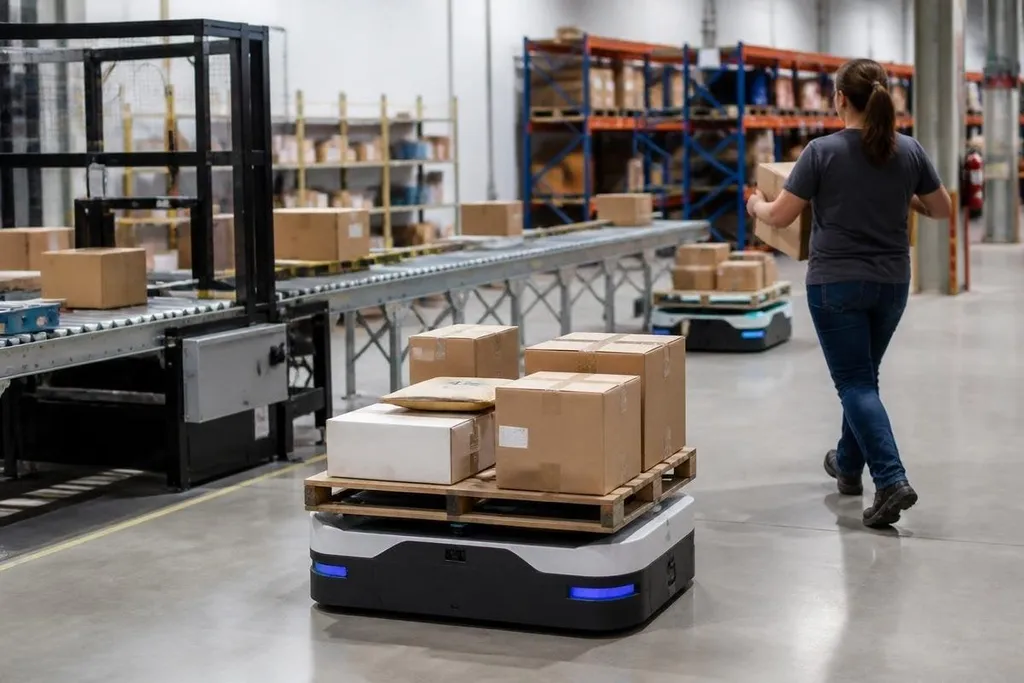
Many warehouse tasks use identical cartons or fixed pallets. Shipping floors rarely stay that tidy. Boxes arrive in different sizes, loads shift, labels face odd directions, and a robot may need to pause while a worker crosses its path.
The strongest progress will come from better grasp planning and sensing. A camera can read a label, while LiDAR measures distance and helps the robot build a map of its work area. Software then chooses a safe grip, checks the load, and changes the route when the planned path closes.
That work has a direct effect on staffing. A robot that handles only one carton shape still needs a person beside it for the rest. A system that deals with mixed freight can cover more of a shift without adding another handoff.
Robots that fit the whole shipping process
A mobile robot rarely works alone. It needs a way to receive a task, find the right location, wait at a dock, and report a problem. That means the next useful advances may sit in software rather than motors or cameras.
Fleet software can assign jobs across several robots and prevent traffic jams. A warehouse management system can send the order, while the robot reports its location and task status. If those links fail, a good machine becomes a slow object in an aisle.
Shipping robot trials also need a dated record of the machine, site, task, and result. Shipping robotics reports from Robot24.com can place those facts beside the claim before you decide whether a demo reflects a full order handoff.
The practical measure is the full handoff. A robot should take a load from one process, move it to the next, and record what happened without a worker typing the same details again.
Safety has to work at normal speed
People and robots share shipping floors, so safety cannot depend on everyone moving slowly. Sensors need to detect workers, pallets, forklifts, and blocked routes. The robot then needs a clear response, such as stopping, slowing, or taking another path.
The useful breakthrough will be fewer unnecessary stops without weaker protection. A robot that stops whenever a loose box enters its view may be safe in a test area but too slow for a busy dock. A robot that ignores uncertain sensor data creates a larger risk.
Buyers should ask how the system behaves after a sensor fault, a lost network link, or a blocked route. They should also ask who can stop the robot and how quickly a worker can reach the emergency control.
What remains unproven
Shipping robots still face the gap between a controlled trial and a full workday. A demo may show a successful pickup, but it may not show recovery after a failed grip, a low battery, a damaged label, or a crowded aisle.
Cost needs the same care. The purchase price is only one part of the bill. A site may also need charging equipment, network work, software fees, floor changes, training, and service visits. If a robot needs a person nearby for most tasks, the expected labor saving changes.
I’d watch the systems that publish failure rates, task times, and the limits of their test setup. Those details tell you more than a smooth video.
A practical check before you buy
Use this list when comparing a shipping robot with a manual process or another machine:
- Name the load: write down the sizes, weights, surfaces, and labels the robot must handle.
- Map the route: include doors, lifts, charging points, people, forklifts, and likely blockages.
- Ask for failure data: request results for missed grips, route changes, sensor faults, and lost connections.
- Count the handoffs: record every point where a worker must guide, reload, approve, or reset the robot.
- Price the full site: include hardware, software, installation, training, support, and floor changes.
- Set a trial measure: choose one task time, error rate, or completed load count before testing starts.
The best shipping robot to watch is the one that can show those results in an active site. Until a supplier can connect its demo to a full shift of measured work, the breakthrough remains a promise rather than a buying reason.