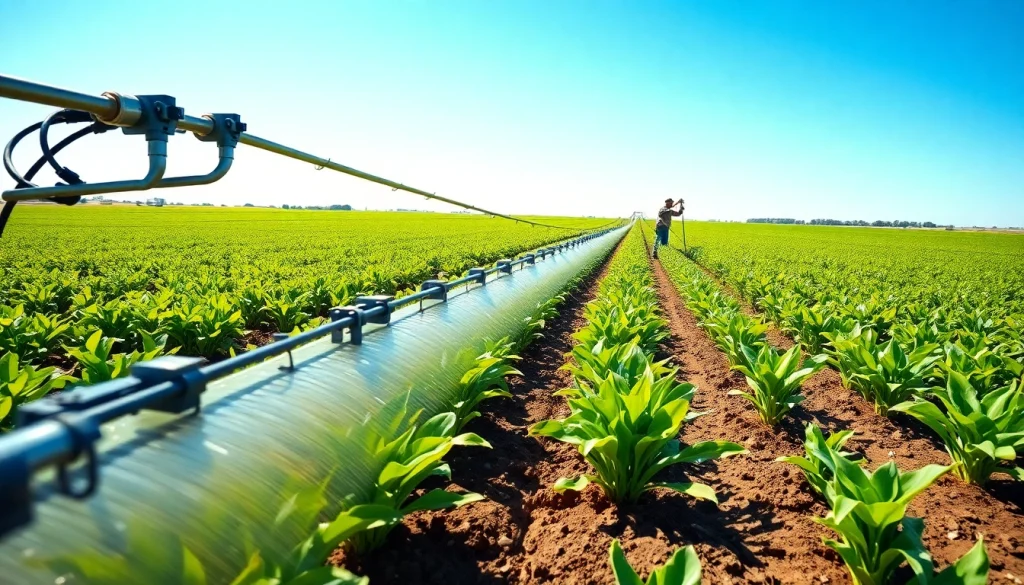
Understanding Land Irrigation
What is Land Irrigation?
Land irrigation is the agricultural practice of applying controlled amounts of water to soil, leading to efficient moisture distribution for plants. This essential farming technique enables cultivators to grow crops in areas with limited rainfall, improve yields, and maximize land productivity. Land irrigation encompasses a variety of practices and technologies, making it a crucial aspect of modern agriculture.
The Importance of Land Irrigation
The significance of land irrigation cannot be overstated. As global populations rise, the demand for food increases proportionately, leading to the need for efficient and productive agricultural practices. Adequate water supply through irrigation systems ensures that crops receive the right amount of moisture, facilitating healthy growth, minimizing drought impacts, and enhancing food security. Furthermore, effective irrigation has economic benefits, reducing dependency on rain-fed agriculture.
Types of Land Irrigation Systems
Various land irrigation systems have been developed to meet the needs of different crops, climates, and terrains. Key types include:
- Surface Irrigation: Water is distributed over the soil surface, relying primarily on gravity for flow. This system is simple but can be inefficient if poorly managed.
- Drip Irrigation: A highly efficient method that delivers water directly to the root zone of plants through a system of tubes and emitters. It minimizes water wastage and is ideal for arid regions.
- Sprinkler Irrigation: Water is sprayed onto crops through a network of pipes, pumps, and sprinklers, mimicking natural rainfall and allowing for uniform coverage.
- Subsurface Irrigation: This involves placing the irrigation system below ground level, which reduces evaporation and delivers water directly to the root zone. It is particularly useful in sandy soils.
Key Components of Land Irrigation
Irrigation Water Sources
Water sources for irrigation can vary widely, depending on local climate and geography. Common sources include:
- Groundwater: Extracted via wells and is a crucial resource in areas with little surface water.
- Surface Water: Rivers, lakes, and reservoirs can be used to supply irrigation needs.
- Rainwater Harvesting: Collecting and storing rainwater can supplement irrigation, especially in areas with unpredictable rainfall.
Infrastructure for Land Irrigation
The effectiveness of any irrigation system depends greatly on its infrastructure. Key components include:
- Pumps: Essential for delivering water from sources to the irrigation system, with various types available based on specific needs.
- Pipes and Channels: Transport water efficiently, with materials ranging from PVC to concrete or natural ditches.
- Storage Facilities: Tanks and reservoirs help in storing water for times of need, ensuring that irrigation can continue during dry periods.
Technologies Enhancing Land Irrigation
Technological advancements have transformed land irrigation into a more efficient and sustainable practice. Some modern technologies include:
- Automation and Smart Controls: Automated systems monitor soil moisture and weather conditions, adjusting irrigation schedules in real-time for optimal efficiency.
- Remote Sensing: Satellite or drone technologies can provide accurate data on crop health and moisture levels, allowing for precise irrigation.
- Soil Moisture Sensors: These devices measure moisture levels in the soil, enabling targeted irrigation that conserves water.
Best Practices for Efficient Land Irrigation
Scheduling and Timing for Irrigation
Optimal irrigation scheduling is crucial for conserving water and maximizing crops’ health. Factors to consider include:
- Plant Growth Stages: Understanding when plants require more water can help tailor irrigation schedules effectively.
- Weather Conditions: Adjusting irrigation based on forecasts can prevent over- or under-watering.
- Soil Moisture Levels: Regular monitoring ensures that irrigation occurs only when necessary.
Soil Management Techniques
Effective soil management is critical to enhancing land irrigation efficiency:
- Soil Testing: Regular testing to understand nutrient levels and soil structure can lead to improved water retention and crop yield.
- Organic Matter Addition: Adding compost or green manure can improve soil structure and moisture retention.
- No-till Practices: Reducing soil disturbance helps maintain moisture levels and soil health.
Monitoring Irrigation Effectiveness
Regular monitoring of irrigation systems can lead to continuous improvements:
- Regular Inspections: Checking for leaks and blockages reduces water wastage.
- Evaluating Crop Response: Analyzing plant health and growth in relation to irrigation can identify areas for improvement.
- Data Logging: Utilizing data to track water usage and system performance can guide future irrigation decisions.
Challenges in Land Irrigation
Water Scarcity Issues
Global water scarcity poses a significant challenge to land irrigation. Over-extraction of groundwater and climate change leads to dwindling water supplies. To address this, strategies such as recycling wastewater and adopting more efficient irrigation methods must be implemented. Moreover, policies promoting sustainable water management play a critical role in mitigating water scarcity for agriculture.
Maintaining System Efficiency
Maintaining the efficiency of irrigation systems is vital for long-term success. Regular maintenance checks can prevent issues like leaks and blockages, which affect water delivery. Training personnel to identify and solve operational problems is also essential for sustaining irrigation systems’ efficiency.
Environmental Impacts of Land Irrigation
While essential for agriculture, land irrigation can have adverse environmental impacts, including soil degradation, salinization, and disruption of local ecosystems. Sustainable practices must be emphasized, such as integrating rainwater harvesting and enhancing soil health to minimize these effects while optimizing farming productivity.
Future Trends in Land Irrigation
Smart Irrigation Technologies
As technology evolves, smart irrigation systems will become increasingly popular. The integration of IoT devices and AI enables farmers to make data-driven decisions, optimizing water usage and reducing waste. Innovations such as sensor networks and machine learning algorithms that analyze vast data sets can predict irrigation needs more accurately.
Sustainable Practices for Land Irrigation
There is a growing commitment towards sustainable agricultural practices that enhance land irrigation efficiency while protecting the environment. Practices such as cover cropping, crop rotation, and conservation tillage improve soil health and moisture retention, contributing to a more resilient farming system.
Resource Management and Conservation
Effective resource management is critical in land irrigation. Techniques such as precision irrigation and integrated water resources management encourage the sustainable use of available water and soil resources. Utilizing modeling to assess resource availability, demand, and environmental impacts ensures ongoing agricultural viability while preserving natural ecosystems.
FAQs About Land Irrigation
1. What are the main benefits of using land irrigation?
Land irrigation enhances crop yield, allows farming in arid regions, and contributes to food security. It also optimizes water usage and can lead to better soil management.
2. How does drip irrigation conserve water?
Drip irrigation delivers water directly to the plant roots, minimizing evaporation and runoff, which helps conserve water compared to traditional methods.
3. How can farmers manage water scarcity in land irrigation?
Farmers can manage water scarcity by adopting efficient irrigation practices, using drought-resistant crop varieties, and implementing rainwater harvesting systems.
4. What technology can improve irrigation efficiency?
Technologies like soil moisture sensors, automated irrigation systems, and data analytics tools can significantly enhance irrigation efficiency.
5. What is the impact of improper irrigation practices?
Improper irrigation can lead to water wastage, soil degradation, salinization, and negative environmental impacts, including loss of biodiversity and habitat disruption.